
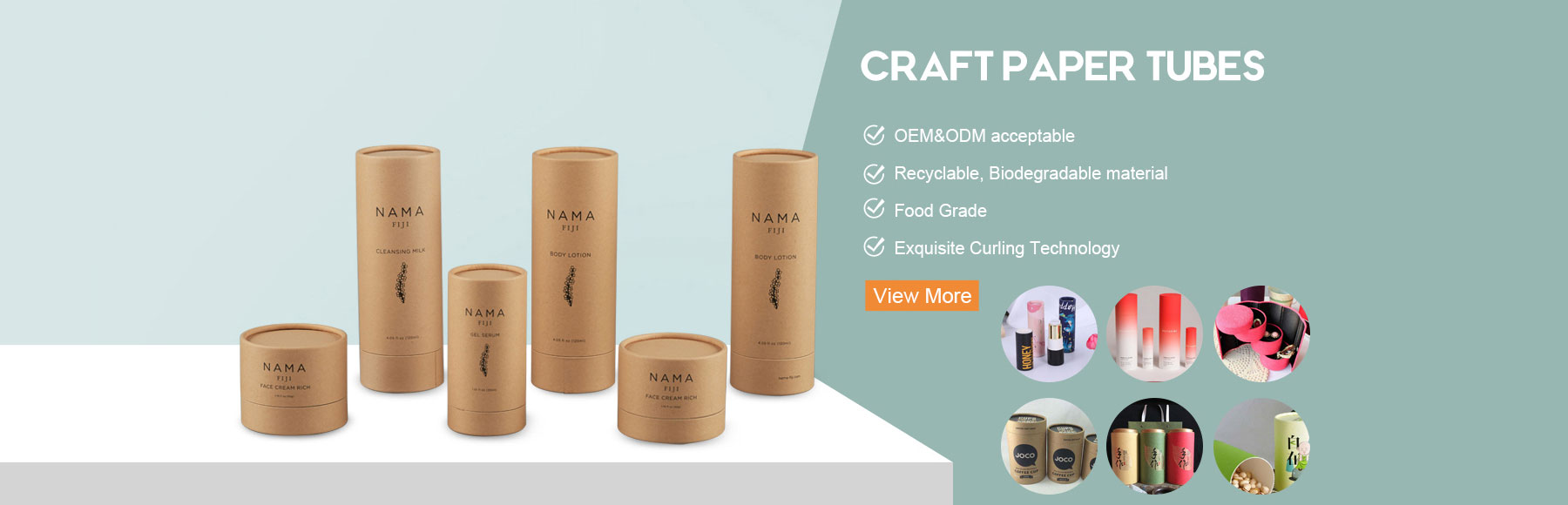
Every year between November and February, we get the same urgent message from new packaging buyers: "The sample tubes you sent in July slid open smoothly. Our bulk shipment just arrived in Rotterdam (or Chicago), and half the lids are jammed tight."
This isn't a mystery, and it rarely happens because the cutting dies changed. It happens because paper is a living hygroscopic fiber. When rigid paper tubes leave a humid workshop in Southern China, spend 35 days inside a steel shipping container crossing freezing North Atlantic or Pacific waters, and then sit inside a dry, heated warehouse at 21°C (70°F), the board expands and contracts unevenly.
At CFY Paper Tube Packaging (Shenzhen Chuangfuyuan Paper Products Co., Ltd.), we treat winter ocean freight as a mechanical engineering problem—not a packaging gamble. Here is what actually causes telescoping tubes to warp at sea, and the exact shop-floor controls we use to prevent it.

During a winter sea voyage, daytime sun and sub-zero night temperatures inside a container create condensation—what freight forwarders call "container rain." If your paper tubes were wound with high-water starch glue or unconditioned kraft board, two things happen in sequence:
At sea: Excess moisture creeps into exposed paper edges and unsealed seams, swelling the multi-ply wall by 0.3mm to 0.6mm.
In the destination warehouse: Indoor heating pulls moisture out of the outer paper wrap faster than the inner core. The outer lid shrinks onto the inner neck, locking the two pieces together.
If a factory rushes production before a holiday deadline without proper drying time, that trapped glue moisture guarantees dimensional drift once the container doors open.
To keep telescoping lids sliding with consistent friction from Shenzhen to North America or Europe, we enforce four non-negotiable parameters on our winding and finishing lines:
Pre-Conditioning Kraft Rolls to 8%–10% Moisture: Before a single roll goes onto the spiral winder, we check incoming FSC-certified kraft paperboard with pin-type moisture meters. Stabilizing fiber moisture between 8% and 10% matches the average indoor equilibrium of Western warehouses, preventing sudden post-delivery shrinkage.
High-Solid, Low-Water PVA Glue: Commodity paper cores often use cheap dextrin or heavily diluted glues to save cost. We run high-solid PVA adhesives with tight doctor-blade gap settings. Less water in the glue line means faster curing, higher spiral-wind tension, and zero edge delamination.
Controlled Kiln Drying Before Rolling & Curling: Freshly wound parent tubes aren't cut immediately. They go through forced-air drying racks so internal moisture equalizes before we cut, curl the rims, or apply the outer printed wrap.
±0.2mm Radial Clearance on Shoulder Tooling: For two-piece and three-piece neck tubes, we machine our curling and sizing dies to maintain a ±0.2mm clearance between the inner shoulder and outer lid. Combined with a water-based matte varnish or soft-touch protective coat on the exterior wrap, the tube sheds surface humidity without losing curbside recyclability.
| Shop-Floor Parameter | Standard Domestic / Commodity Tube | CFY Export-Grade Paper Canister |
| Incoming Paper Moisture | Unchecked (often 12%–15%+) | Verified 8%–10% Equilibrium |
| Adhesive Formulation | High-water starch / diluted glue | High-Solid, Low-Moisture PVA |
| Post-Winding Curing | Air-dried on floor (uneven) | Forced-Air Drying Racks |
| Lid-to-Neck Tolerance | ±0.5mm – 0.8mm (risk of jamming) | Calibrated ±0.2mm Radial Fit |
| Vertical Crush Resistance | 30 kg – 40 kg | 45 kg – 65 kg Multi-Ply Kraft Wall |
We see the biggest payoff from moisture-calibrated tubes in three specific product lines:
Specialty Coffee & Loose-Leaf Tea: Coffee roasters using rigid paper canisters with easy-peel aluminum or paper membranes cannot afford warped rims—even a 0.4mm oval distortion compromises the heat-seal integrity at the top edge.
Dropper Bottles & Skincare Packaging: Luxury cosmetic brands care deeply about the "unboxing drag"—that slow, controlled slide when a customer lifts the lid. Keeping radial clearance at ±0.2mm preserves that tactile feel whether the retail store is in humid Miami or dry Denver.
Spirits, Candles & Heavy Glass Jars: On palletized ocean shipments stacked 2.2 meters high, moisture-weakened tube walls buckle under compression. A properly cured 2.5mm–3.5mm kraft wall carries full vertical stack loads without crushing.
If you are locking in Q1 2027 production slots right now, don't just approve a visual sample—ask your factory two technical questions:
"What is the target moisture content of your kraft core before cutting, and how long do tubes cure before wrapping?"
"What radial clearance tolerance do you hold between the inner shoulder and outer lid?"
At Shenzhen Chuangfuyuan (CFY) Paper Products Co., Ltd., every export batch is caliper-checked and moisture-tested before carton packing, and we turn around custom structural samples in 3–5 business days.